
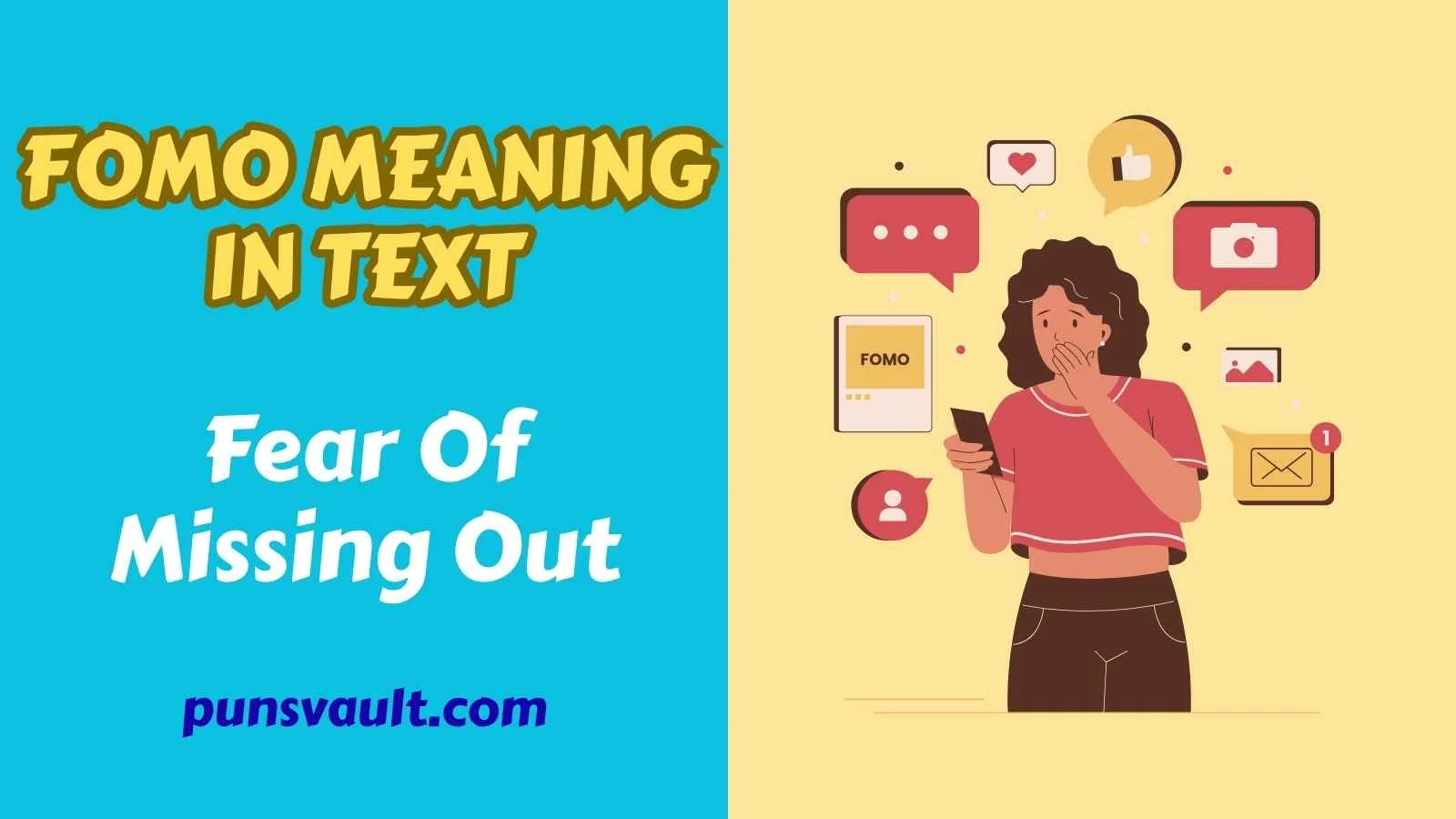
If you spend time on social media, texting apps, or online communities, you have probably seen the word FOMO pop up everywhere. Someone posts vacation photos, friends share party clips, or influencers upload exciting life updates – and suddenly people comment, “I’m getting serious FOMO!”
But what is the real FOMO meaning in text conversations?
In simple words, FOMO means “Fear of Missing Out.” It describes the anxious feeling people experience when they think others are enjoying something exciting without them.
Today, the term has become a huge part of internet culture. From Instagram captions to TikTok comments and WhatsApp chats, people use FOMO daily to express emotions, social pressure, excitement, or regret.
In this complete guide, you will learn:
- What FOMO means in text messages
- The origin of the word
- How people use it online
- Examples in real conversations
- The psychology behind FOMO
- Its effect on social media habits
- Related slang terms and modern expressions
By the end of this article, you will fully understand how and why people use FOMO in modern communication. 🚀
What Does FOMO Meaning in Text? 📲
The term FOMO stands for:
Fear Of Missing Out
In texting and online communication, people use it when they feel left out of an experience, event, trend, or opportunity.
It usually appears when:
- Friends hang out without someone
- A popular trend goes viral
- Someone misses a party or event
- People see exciting travel or lifestyle posts
- A limited-time opportunity appears online
Simple Example of FOMO in Text
Friend 1: “We all went to the beach yesterday!”
Friend 2: “Stoppp 😭 I have major FOMO now.”
In this example, the second person feels disappointed because they missed the fun experience.
The Origin of the Word FOMO Meaning in Text 🕰️
Although the feeling has existed for centuries, the actual term FOMO became popular in the early 2000s.
The phrase gained attention during the rise of:
- Social media platforms
- Smartphones
- Online communities
- Digital lifestyle culture
Experts noticed that constant exposure to other people’s lives increased anxiety and comparison.
Eventually, “Fear Of Missing Out” became shortened to the catchy acronym FOMO.
Why Social Media Increased FOMO
Before social media, people only knew about nearby events or experiences. Today, everyone can instantly see:
- Luxury vacations ✈️
- Concerts 🎵
- Parties 🎉
- Food experiences 🍕
- Relationship moments ❤️
- Career wins 💼
This nonstop exposure can create emotional pressure and comparison.
How FOMO Meaning in Text Is Used in Modern Texting 💬
The modern FOMO meaning in text has evolved beyond simple jealousy. People now use it casually, humorously, and emotionally.
1. Missing Social Events
This is the most common use.
Example:
“Everyone is at the concert and I’m stuck working. The FOMO is real.”
2. Missing Online Trends
People also use FOMO when they are late to trends.
Example:
“I finally downloaded the app because of FOMO.”
3. Shopping and Marketing
Brands often create FOMO intentionally.
Examples include:
- Limited-time sales
- Exclusive offers
- Countdown timers
- VIP memberships
This strategy encourages quick decisions.
4. Travel and Lifestyle Posts
Social media travel content often creates FOMO.
Example:
“Your vacation photos are giving me FOMO 😭”
Common Examples of FOMO in Text Messages 📱
| Text Example | Meaning |
|---|---|
| “I’m getting FOMO.” | Feeling left out |
| “That party gave me serious FOMO.” | Upset about missing an event |
| “Don’t post more pictures. My FOMO is bad enough.” | Jealous in a playful way |
| “I bought tickets because of FOMO.” | Did not want to miss the experience |
| “Crypto investors had huge FOMO in 2021.” | People feared missing profits |
Why People Experience FOMO 🧠
FOMO is not just internet slang. It is connected to real human psychology.
Humans naturally want:
- Connection
- Belonging
- Recognition
- Social acceptance
When people believe others are enjoying life more than they are, they may feel anxious or excluded.
Psychological Triggers of FOMO
- Social comparison
- Low self-esteem
- Loneliness
- Digital addiction
- Fear of regret
- Peer pressure
Experts often connect FOMO with excessive social media use because online platforms constantly show idealized versions of people’s lives.
FOMO and Social Media Culture 📸
Modern social media platforms are one of the biggest drivers of FOMO.
Apps like Instagram, TikTok, Snapchat, and Facebook encourage people to share exciting highlights of their lives.
However, most users only post their best moments.
Examples of Social Media FOMO
- Seeing friends travel without you
- Watching influencers attend exclusive events
- Missing viral internet challenges
- Feeling behind in trends
- Comparing lifestyles online
This can create emotional pressure, especially among teenagers and young adults.
“Comparison is the thief of joy.”
This quote perfectly explains why FOMO affects so many people online.
Positive vs Negative FOMO ⚖️
Interestingly, FOMO is not always harmful.
Sometimes it motivates people to try new experiences, meet friends, or explore opportunities.
| Positive FOMO | Negative FOMO |
|---|---|
| Encourages social interaction | Causes anxiety |
| Motivates adventure | Creates insecurity |
| Pushes people to explore | Leads to comparison |
| Builds experiences | Increases stress |
| Improves participation | Creates unhealthy habits |
The key is balance.
How Businesses Use FOMO in Marketing 💰
One fascinating part of the FOMO meaning in text is its connection to digital marketing.
Businesses use FOMO strategies to increase sales and engagement.
Common Marketing FOMO Tactics
- “Only 2 items left!”
- “Sale ends tonight!”
- “Limited edition release”
- “Exclusive access”
- “Trending now”
These messages create urgency and encourage fast decisions.
Why FOMO Marketing Works
People hate feeling left behind. Brands understand this emotional trigger and use it to increase conversions.
That is why online stores often include:
- Countdown timers ⏰
- Flash sales 🔥
- Limited stock alerts 📦
- Exclusive member access ⭐
FOMO in Different Online Platforms 🌐
Instagram is one of the biggest sources of FOMO because of lifestyle content and curated photos.
TikTok
TikTok trends move extremely fast. Many users fear missing viral challenges or trending sounds.
Snapchat
Snapchat stories can create social anxiety when users see friends hanging out together.
YouTube
People may experience FOMO watching creators attend events, travel, or live luxury lifestyles.
Gaming Communities
Gamers often feel FOMO during:
- Limited-time events
- Season passes
- Exclusive skins
- Special rewards
Popular Slang Related to FOMO 🔥
Internet slang constantly evolves. Here are related terms often connected with FOMO.
| Slang Term | Meaning |
|---|---|
| YOLO | You Only Live Once |
| JOMO | Joy Of Missing Out |
| OMO | Overwhelmed by Missing Out |
| Flex | Showing off online |
| Viral | Popular online trend |
What Is JOMO? 😊
JOMO means:
Joy Of Missing Out
Instead of feeling stressed, people enjoy staying offline, relaxing, and avoiding social pressure.
JOMO has become increasingly popular as people seek healthier digital habits.
Real-Life Examples of FOMO in Daily Life 🌍
1. Missing a Concert
Your friends attend a music concert while you stay home. Later, you see videos online and feel regret.
That feeling is FOMO.
2. Trending Apps
Everyone starts using a new app, and you download it simply to avoid feeling left out.
3. Investment Trends
People sometimes buy stocks or cryptocurrency because they fear missing profits.
4. Online Gaming
Players rush to unlock seasonal rewards before they disappear forever.
5. Social Gatherings
Seeing party photos online can trigger emotional comparison and exclusion.
How FOMO Affects Mental Health 🧘
Although FOMO sounds harmless, excessive fear of missing out can affect mental well-being.
Possible Effects of Extreme FOMO
- Anxiety
- Stress
- Poor sleep
- Digital addiction
- Constant comparison
- Low self-confidence
Research has shown that heavy social media use may increase feelings of dissatisfaction and loneliness in some individuals.
Warning Signs of Unhealthy FOMO
- Checking your phone constantly
- Feeling upset after browsing social media
- Comparing your life to others daily
- Fear of being excluded
- Difficulty enjoying offline moments
How to Deal with FOMO in Healthy Ways 🌱
Thankfully, there are many ways to reduce unhealthy FOMO.
1. Limit Social Media Time
Taking breaks from apps can improve mental clarity.
2. Focus on Real-Life Goals
Instead of comparing yourself to others, focus on your own progress.
3. Practice Gratitude
Appreciating your current life reduces comparison.
4. Remember That Social Media Is Curated
Most people only post highlights, not struggles.
5. Embrace JOMO
Sometimes missing out is actually peaceful and healthy.
FOMO Meaning in Text Among Teenagers 👦👧
Teenagers and young adults use FOMO more than almost any other age group.
This happens because social connection is extremely important during adolescence.
Common Teen FOMO Situations
- School events
- Friend groups
- Gaming communities
- TikTok trends
- Instagram stories
Many teens use the word casually in group chats.
Example:
“You guys went without me? I have FOMO now 😭”
How FOMO Changed Internet Culture 🌎
FOMO has become one of the defining emotions of the digital age.
Today, online platforms are built around:
- Notifications
- Trending content
- Stories that disappear
- Live events
- Exclusive experiences
These features encourage users to stay connected constantly.
As a result, FOMO has influenced:
- Marketing
- Social behavior
- Consumer habits
- Internet slang
- Digital psychology
Quick Summary: FOMO Meaning in Text 📝
| Topic | Explanation |
|---|---|
| Full Meaning | Fear Of Missing Out |
| Main Emotion | Anxiety about missing experiences |
| Common Platforms | Instagram, TikTok, Snapchat |
| Usually Used In | Texting, social media, online slang |
| Opposite Term | JOMO (Joy Of Missing Out) |
FAQs:
1. What does FOMO mean in texting?
FOMO means Fear Of Missing Out. People use it when they feel left out of experiences, events, or trends.
2. Is FOMO a bad thing?
Not always. Sometimes FOMO encourages people to explore opportunities. However, excessive FOMO can create stress and anxiety.
3. Where is FOMO commonly used?
FOMO is commonly used on Instagram, TikTok, Snapchat, WhatsApp, and other social media platforms.
4. What is the opposite of FOMO?
The opposite is JOMO, which stands for Joy Of Missing Out.
5. Why do social media apps create FOMO?
Social media platforms constantly show exciting moments from other people’s lives, which can trigger comparison and emotional pressure.
Conclusion: Final Thoughts 💡
The modern FOMO meaning in text goes far beyond internet slang. It represents a real emotional experience shaped by social media, online culture, and human psychology.
Whether someone feels left out of a party, a viral trend, or a life-changing opportunity, FOMO reflects the universal desire to belong and stay connected.
At the same time, understanding FOMO can help people build healthier digital habits, reduce comparison, and focus more on meaningful real-world experiences.
In today’s fast-moving online world, balance matters more than ever. 🌱

I’m John Alex, a word enthusiast and meaning explorer behind a platform dedicated to uncovering the stories, slang, phrases, and hidden meanings behind everyday words. I love turning confusing terms into simple, engaging explanations that readers can instantly connect with. My goal is to make language fun, clear, and easy to understand while helping people stay updated with trending meanings and modern expressions across the internet.